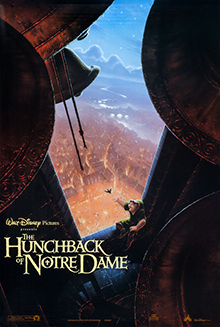
Disney's Bold Vision: Reimagining The Hunchback Of Notre Dame
In 1996, Walt Disney Feature Animation embarked on an ambitious project that would challenge preconceived notions of what a Disney animated film could be. Their adaptation of Victor Hugo's epic 1831 novel, The Hunchback of Notre Dame, brought a darker, more mature narrative to the screen than many audiences had come to expect from the House of Mouse. This animated musical period drama, while taking creative liberties, powerfully explored themes of prejudice, acceptance, and redemption against the stunning backdrop of medieval Paris.
Directed by the acclaimed duo Gary Trousdale and Kirk Wise (known for their work on Beauty and the Beast), and produced by Don Hahn, Disney's 1996 Hunchback of Notre Dame stood out in the "Disney Renaissance" era. It featured a compelling story penned by Tab Murphy, Irene Mecchi, Jonathan Roberts, and the writing team of Bob Tzudiker and Noni White. The film captivated viewers with its breathtaking animation, soaring musical numbers by Alan Menken and Stephen Schwartz, and a cast of unforgettable characters brought to life by a stellar voice cast including Tom Hulce as Quasimodo, Demi Moore as Esmeralda, Tony Jay as Claude Frollo, and Kevin Kline as Captain Phoebus.
A Deeper Dive into Disney's Darkest Tale
At its heart, Disney's Hunchback of Notre Dame tells the poignant story of Quasimodo (voiced by Tom Hulce), the kind-hearted but deformed bell-ringer of Notre Dame Cathedral. Confined to the bell tower by his cruel and puritanical adoptive father, Judge Claude Frollo (a chilling performance by Tony Jay), Quasimodo yearns to experience the outside world and be accepted by society. His journey for connection and belonging forms the core of the narrative, setting him against Frollo's tyrannical control and deep-seated prejudice, particularly against Paris's Romani population.
The film bravely tackled mature themes, making it a standout in the Disney canon. Issues such as religious hypocrisy, lust, social ostracization, and genocide were woven into a tapestry that, while simplified for a family audience, retained much of Hugo's original gravitas. The vibrant streets of medieval Paris, teeming with life and contrasting sharply with the somber interiors of Notre Dame, provided a rich visual and thematic landscape for this compelling tale.
One of the film's most remarkable achievements is its ability to blend these challenging themes with the traditional Disney animated musical format. The songs, from the powerful opening "Bells of Notre Dame" to Frollo's terrifying "Hellfire" and Esmeralda's heartfelt "God Help the Outcasts," don't merely advance the plot; they delve deep into the characters' psyches, exposing their desires, fears, and moral struggles. This musical depth elevates the narrative, allowing even young viewers to grasp the emotional weight of the story without explicit exposition.
The Genesis of a Gothic Animated Masterpiece
The idea to adapt Victor Hugo's sprawling Gothic novel into an animated feature might seem unorthodox for Disney, but it was a vision born in 1993. David Stainton, then a development executive at Disney Feature Animation, conceived the ambitious project, recognizing the potential for a powerful story within the studio's reach. The journey from concept to screen was a complex one, involving extensive research, creative collaboration, and a commitment to honoring the spirit of Hugo's work while making it accessible to a broader audience.
The production team faced numerous challenges, not least of which was translating the novel's mature themes—such as Frollo's twisted religious fanaticism and lust—into a form suitable for an animated feature. This required careful storytelling and visual metaphors, ensuring that the film could resonate with both children and adults. The directors, writers, and animators worked tirelessly to create a world that felt both authentically medieval and distinctly Disney, blending the architectural grandeur of Notre Dame with expressive character animation.
For a deeper look into the creative forces behind this monumental undertaking and how the team navigated the complexities of such a unique adaptation, explore Making Disney's Hunchback: Directors, Writers, and 1993 Origins. Understanding the foundation laid in 1993 by individuals like David Stainton helps appreciate the intricate process that brought this distinct film to life.
Beyond the Bell Tower: Unpacking the Film's Enduring Themes
Disney's Hunchback of Notre Dame is more than just a beautifully animated movie; it's a profound exploration of timeless social issues. The film forces its audience to confront uncomfortable truths about:
- Prejudice and Discrimination: Frollo's relentless persecution of the Romani people and his hatred for Quasimodo due to his appearance serve as stark portrayals of bigotry. The film champions acceptance and highlights the destructive nature of judgment based on superficial differences or unfounded fear.
- Inner vs. Outer Beauty: Quasimodo, despite his physical deformities, possesses a heart of gold and immense kindness. In contrast, Frollo, outwardly a respected man of authority, harbors profound darkness and cruelty within. This contrast vividly illustrates that true beauty and monstrousness reside in one's character, not their appearance.
- Justice and Morality: The film constantly questions the nature of justice, particularly through the character of Frollo, who believes his actions are righteous even as he commits atrocities. Esmeralda, a beacon of compassion and defiance, stands as a moral compass, fighting for the downtrodden and challenging established injustices.
- The Struggle for Acceptance: Quasimodo's yearning for belonging is a universal theme. His attempts to integrate into society during the Festival of Fools and his subsequent humiliation are heartbreaking yet pivotal moments that resonate deeply with anyone who has ever felt like an outsider.
These themes, while heavy, are handled with a nuanced touch that allows for discussion and reflection. The film encourages viewers to look beyond appearances, question authority, and empathize with those who are marginalized. Its bravery in tackling such subjects cemented its place as one of Disney's most thought-provoking and mature animated films. To delve further into the intricacies of the narrative and the characters' journeys, read more about Quasimodo's Quest: Exploring Disney's Hunchback of Notre Dame Plot.
Practical Tips for Appreciating the Film's Depth
For new viewers or those revisiting the film, here are some tips to fully appreciate the depth of Disney's Hunchback of Notre Dame:
- Pay Attention to Symbolism: The cathedral itself is a character, representing both sanctuary and imprisonment. Bells symbolize freedom and Quasimodo's voice, while light and shadow visually reflect moral choices.
- Listen to the Lyrics: Stephen Schwartz's lyrics for Alan Menken's music are incredibly rich and carry significant narrative and thematic weight. Songs like "Out There" and "Hellfire" are crucial for understanding character motivations.
- Observe Character Arcs: While Quasimodo's journey is central, consider the subtle transformations (or lack thereof) in characters like Phoebus, Esmeralda, and even Frollo.
- Discuss the Themes: After watching, especially with older children or adults, engage in discussions about prejudice, compassion, and what it means to be truly good or evil. It offers an excellent starting point for complex conversations.
- Consider the Historical Context: While a fantasy, the film touches upon aspects of medieval life, religion, and social structures. A basic understanding of the period can enrich the viewing experience.
Conclusion: The Enduring Legacy of Disney's Hunchback
Disney's 1996 Hunchback of Notre Dame remains a powerful and unique entry in the animation canon. It dared to venture into darker territory, presenting a narrative that was both visually stunning and emotionally profound. While it may not have achieved the same commercial heights as some of its more lighthearted Renaissance counterparts, its artistic integrity, complex themes, and unforgettable characters have earned it a devoted following and a significant place in animation history. The film stands as a testament to Disney's capacity for storytelling that transcends simple entertainment, offering a timeless message of hope, acceptance, and the courage to see beyond the surface, echoing Victor Hugo's original intentions through a distinctly Disney lens. It continues to provoke thought and inspire discussion, reminding us of the enduring power of empathy in a world often quick to judge.